
 Facebook
 X
X LinkedIn
 Forward
Therapeutic Neuroscience Education: Teaching People About Pain (6-Week Online)

Registration |
|---|
Cost
If you have questions, please email Orlando Candelaria. |
Target Audience
Healthcare providers.
Purpose
This 6-week online course teaches clinicians how to integrate Pain Neuroscience Education (PNE) into their clinical practice. Current best evidence shows that neuroscience education strategies using neurobiology and neurophysiology can reduce pain, increase function, reduce fear and catastrophization, improve movement, change cognitions, and alter brain activation during pain experiences.
This class will cover the evolution of PNE, explain why neuroscience education is needed in physical therapy, and teach the foundations of pain neurobiology and neurophysiology. More importantly, participants will learn how to apply PNE in their practice with patients experiencing acute, subacute, and chronic pain.
Learning Objectives
- Discuss the need for pain neuroscience education in their clinical practice.
- Identify factors in their current patient population that may contribute to driving a patient toward the fear or recovery pathway in the Fear-Avoidance Model by Vlaeyen et al.
- Discuss the latest evidence for pain neuroscience education.
- Identify a clinical scenario in their practice where they had to adjust the level of education to meet the client where they were at and describe how they adjusted their communication.
- Describe in words what they will say to a patient to teach them that pain is an output rather than an input using the Mature Organism Model from Louis Gifford.
- Provide an empathetic discussion with a patient/client about how a “threat” or stressor can influence the pain experience, using a clinical scenario.
- Share a brief clinical case scenario of a current or past patient/client in which they believe the issue is/was likely driven by a change in ion channel distribution.
- Explain to a patient/client the role of ion channels in their pain experience.
- Explain to a patient/client how and why pain can spread.
- Explain to a patient that tissue issues are only one part of their pain experience.
- Discuss how to safeguard their PNE story/message so patients/clients understand that their pain is real, even when tissue damage or structural findings do not fully explain their pain experience.
- List potential strategies for implementing therapeutic neuroscience into clinical practice related to time, staff, billing, and traditional treatments.
- Communicate to the patient/client that pacing and graded exposure are key components of recovery when provided a patient scenario.
- Demonstrate the clinical ability to apply pain neuroscience education to clinical practice using at least one metaphor shared in class.
Outline
| Module | Title |
|---|---|
| One | Cognitions, Education and Pain and the Evolution and Evidence of TNE |
| Two | Reconceptualizing Pain - From Nociception to the Pain Neuromatrix |
| Three | Reconceptualizing Pain and Clinical Reasoning in Pain Science |
| Four | Teaching People About Pain Using Metaphors, Examples and Pictures |
| Five | Teaching People About Pain and Building it into Clinical Practice |
| Six | More than Education: Pacing, Graded Exposure and Function |
| Wrap Up | Final Assignments and Assessment |
Speaker
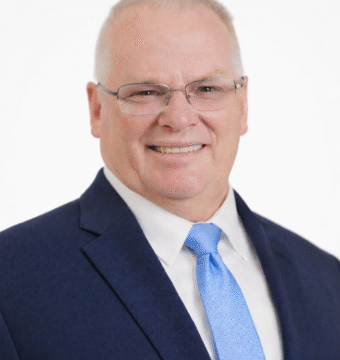
Adriann Louw, PT, PhD
Vice President of Faculty Experience, Evidence In Motion
Dr. Louw earned his undergraduate degree, master’s degree, and PhD in physiotherapy from the University of Stellenbosch in Cape Town, South Africa. He is an adjunct faculty member at the University of Nevada, Las Vegas, where he teaches pain science. He is a senior faculty member, pain science director, and vice-president for Evidence in Motion.
Dr. Louw has taught throughout the US and internationally for 30 years at numerous national and international manual therapy, pain science, and medical conferences. He has authored and co-authored more than 130 peer-reviewed articles on spinal disorders and pain science.
Course summary
- 33.50 AMA PRA Category 1 Credits™
- 33.50 AOA Category 2A
- 33.50 CE Contact Hour(s)
Accreditation Statements
- DO: Des Moines University Medicine and Health Sciences (DMU) is accredited by the American Osteopathic Association (AOA) to provide osteopathic continuing medical education for physicians. DMU designates this activity for a maximum of 33.5 AOA Category 2-A credits and will report CME and specialty credits commensurate with the extent of the physician’s participation in this activity.
- MD: This activity has been planned and implemented in accordance with the accreditation requirements and policies of the Iowa Medical Society (IMS) through the joint providership of Des Moines University Medicine and Health Sciences (DMU) and Evidence in Motion. DMU designates this blended learning activity for 33.5 AMA PRA Category 1 Credit(s)™. Physicians should claim only the credit commensurate with the extent of their participation in the activity.
- Nurses: Des Moines University Medicine and Health Sciences has determined that this activity meets the requirements for 33.5 contact hours as defined by the Iowa Board of Nursing and Iowa Administrative Code 481-619.
- Other healthcare providers: This activity is designated for 33.5 AMA PRA Category 1 Credit(s)™.
 |  |
Educational Grants
No ineligible company provided financial support for this continuing education activity.
Disclosures
The speaker(s) will disclose if any pharmaceuticals, medical procedures, or devices discussed are investigational or unapproved for use by the U.S. Food and Drug Administration (FDA). The activity directors are responsible for determining educational content and selecting speakers.
Relevant to the content of this educational activity, the following individual(s) have no conflict(s) with ineligible companies to disclose.
- Orlando Candelaria - Activity Coordinator and Planning Committee Member
- Sheryl Clark, MBA - Planning Committee Member
- Ely Elliott - Activity Director and Planning Committee Member
- Colleen Louw, PT, MPT, MEd - Planning Committee Member
Relevant to the content of this educational activity, the following individual(s) have conflict(s) with ineligible companies to disclose. All relevant financial relationships have been mitigated through peer review by individuals with no relevant financial relationships or through attestation to evidence-based clinical guidelines.
- Adriann Louw, PT, PhD - Speaker
- OPTP
- Royalties for patient and provider textbooks.
- The financial relationship has not ended, and it is relevant to the content of the education activity.
- OPTP
Disclaimer
The information provided in this activity is for continuing education purposes only. It is not a substitute for a healthcare provider's independent medical judgment regarding diagnostic and treatment options for a specific patient's medical condition.
Available Credit
- 33.50 AMA PRA Category 1 Credits™
- 33.50 AOA Category 2A
- 33.50 CE Contact Hour(s)