
 Facebook
 X
X LinkedIn
 Forward
Therapeutic Neuroscience Education

| Registration |
|---|
|
Target Audience
Healthcare providers.
Description
This course updates attendees on the latest evidence and clinical application of pain neuroscience education (PNE) for patients in pain. Current best evidence shows that neuroscience educational strategies using neurobiology and neurophysiology can reduce pain, increase function, reduce fear and catastrophizing, and improve movement, while changing cognitions and brain activation during pain experiences. PNE changes patient beliefs regarding their pain, thus reducing the threat of pain. This class will discuss the evolution of PNE, why PNE is needed in medicine and rehabilitation, and, more importantly, the clinical application and implementation of PNE for patients with acute, sub-acute, and chronic pain.
Special features include metaphors, images, examples, and case studies using PNE with patients experiencing pain. In addition, the class will cover the emerging clinical concept of PNE+ – PNE plus various behavioral strategies to ease pain, improve function, and obtain goals. PNE+ covered in this class includes exercise, pacing, graded exposure, sleep hygiene, goal setting, coping strategies, meditation, mindfulness, and more. This course will teach attendees how cognitive (PNE) strategies, along with behavioral techniques (PNE+), fit within the current best-evidence approach to treating pain, especially chronic pain.
Finally, the course will delve into key clinical applications, including billing, time management, documentation, multi- and interdisciplinary approaches, and more. This will strengthen attendees’ ability to implement PNE in various clinical settings. This class is essential for all healthcare providers who care for patients with pain.
Learning Objectives
- Discuss the latest evidence for pain neuroscience education.
- Generalize pain neuroscience education concepts to clinical practice using at least one metaphor shared in class.
- List at least half of the output systems discussed in class and their response in a patient experiencing chronic pain.
- List potential strategies to implement pain neuroscience into clinical practice regarding time, staff, billing, and traditional therapeutic treatments.
- Outline a treatment plan for a patient with chronic pain based on output system dysfunctions, with correct pain neurophysiological reasoning and information provided in the course.
Course Format
This course material is presented through online video lectures, video demonstrations, required course readings, and asynchronous and synchronous online review, including discussions of patient cases/scenarios. Additional out-of-class work may include study and reflection, completing assignments, reading and reviewing assigned materials, completing necessary research, and group meetings for study or project completion. On-site lab immersive hours focus on reviewing clinical skills and developing critical reasoning for competent patient management.
Instructor
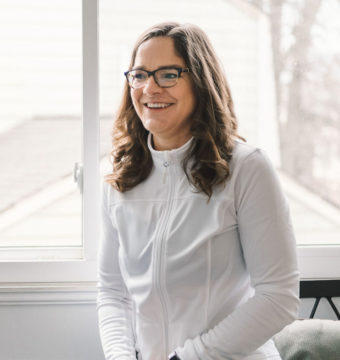
Jen Uschold, PT
Ms. Uschold is a 1991 graduate of the University of Scranton in Pennsylvania. She has worked in multiple treatment environments, including travel PT. She has focused on outpatient care for the past 25 years. Her approach with patients has been strongly influenced by the Institute of Physical Art and Evidence In Motion. In addition to PT, Ms. Uschold integrates wellness coaching into most sessions as she is also a National Board Certified Health and Wellness Coach. Most recently, she has become a Certified Positive Intelligence Coach, which integrates well with Pain Neuroscience Education. Ms. Uschold loves teaching and has been doing so since 1998. She has taught with Rehab Connections in Chicago and The Jackson Clinics in Virginia, and has been an adjunct faculty member with the Institute of Physical Art, based in Colorado. She is thrilled to join the EIM teaching team and serve as program director for the Certification in Lifestyle Medicine at EIM. Ms. Uschold has owned a small private practice since 2007.
Pre-Course Outline
8.0 credits.
- Cognitions, Education, Pain, and the Evolution and Evidence of TNE
- Reconceptualizing Pain - From Nociception to the Pain Neuromatrix
- Reconceptualizing Pain and Clinical Reasoning in Pain Science
- Teaching People About Pain Using Metaphors, Examples, and Pictures
Agenda
8.25 credits.
| Time | Session |
|---|---|
| 8:00 am | Review of Didactic Content |
| 8:40 am | Clinical Application of Teaching People About Pain |
| 10:00 am | Break |
| 10:15 am | Clinical Application of Teaching People About Pain (Continued) |
| 11:40 am | Lunch |
| 12:40 pm | Lab: Practicing Pain Neuroscience Metaphors |
| 1:30 pm | Pain Neuroscience Education in the Clinic |
| 2:10 pm | Break |
| 2:20 pm | Building a Comprehensive Pain Program around Pain Neuroscience Education |
| 2:35 pm | PNE+ Non-Pharmacological Treatment for Pain |
| 4:50 pm | PNE+ Lab |
| 5:10 pm | Case Study: Chronic Pain |
| 5:30 pm | Adjourn |
Course summary
- 16.25 AMA PRA Category 1 Credits™
- 16.25 AOA Category 2A
- 16.25 CE Contact Hour(s)
Accreditation Statements
- MD: This activity has been planned and implemented in accordance with the accreditation requirements and policies of the Iowa Medical Society (IMS) through the joint providership of Des Moines University Medicine and Health Sciences (DMU) and Evidence in Motion. DMU is accredited by the IMS to provide continuing medical education for physicians. DMU designates this live activity for 16.25 AMA PRA Category 1 Credit(s)™. Physicians should claim only the credit commensurate with the extent of their participation in the activity.
- DO: Des Moines University Medicine and Health Sciences (DMU) is accredited by the American Osteopathic Association (AOA) to provide osteopathic continuing medical education for physicians. DMU designates this activity for a maximum of 16.25 AOA Category 2-A credits and will report CME and specialty credits commensurate with the extent of the physician’s participation in this activity.
- Other healthcare providers: This activity is designated for 16.25 AMA PRA Category 1 Credit(s)™.
 |  |
Educational Grants
No ineligible company provided financial support for this continuing education activity.
Disclosures
The speaker(s) will disclose if any pharmaceuticals, medical procedures, or devices discussed are investigational or unapproved for use by the U.S. Food and Drug Administration (FDA). The activity director is responsible for determining educational content and selecting speakers.
Relevant to the content of this educational activity, the following individual(s) have no conflict(s) with ineligible companies to disclose.
- Orlando Candelaria - Activity Coordinator
- Sheryl Clark, MBA - Post-Professional Curriculum Director
- Ely Elliott, MHA - Activity Director
- Jen Uschold, PT - Instructor
Relevant to the content of this educational activity, the following individual(s) have conflict(s) with ineligible companies to disclose. All relevant financial relationships have been mitigated through peer review by individuals with no relevant financial relationships or through attestation to evidence-based clinical guidelines.
- Colleen Louw, PT - Program Director and Planning Committee Member
- Royalties: OPTP
- Ms. Louw indicated that the financial relationship has not ended and is relevant to the content of the educational activity.
Disclaimer
The information provided in this activity is for continuing education purposes only. It is not meant to substitute for the independent medical judgment of a healthcare provider regarding diagnostic and treatment options for a specific patient’s medical condition.
Available Credit
- 16.25 AMA PRA Category 1 Credits™
- 16.25 AOA Category 2A
- 16.25 CE Contact Hour(s)
Price
This is a private course. Registrations are not being accepted.