
 Facebook
 X
X LinkedIn
 Forward
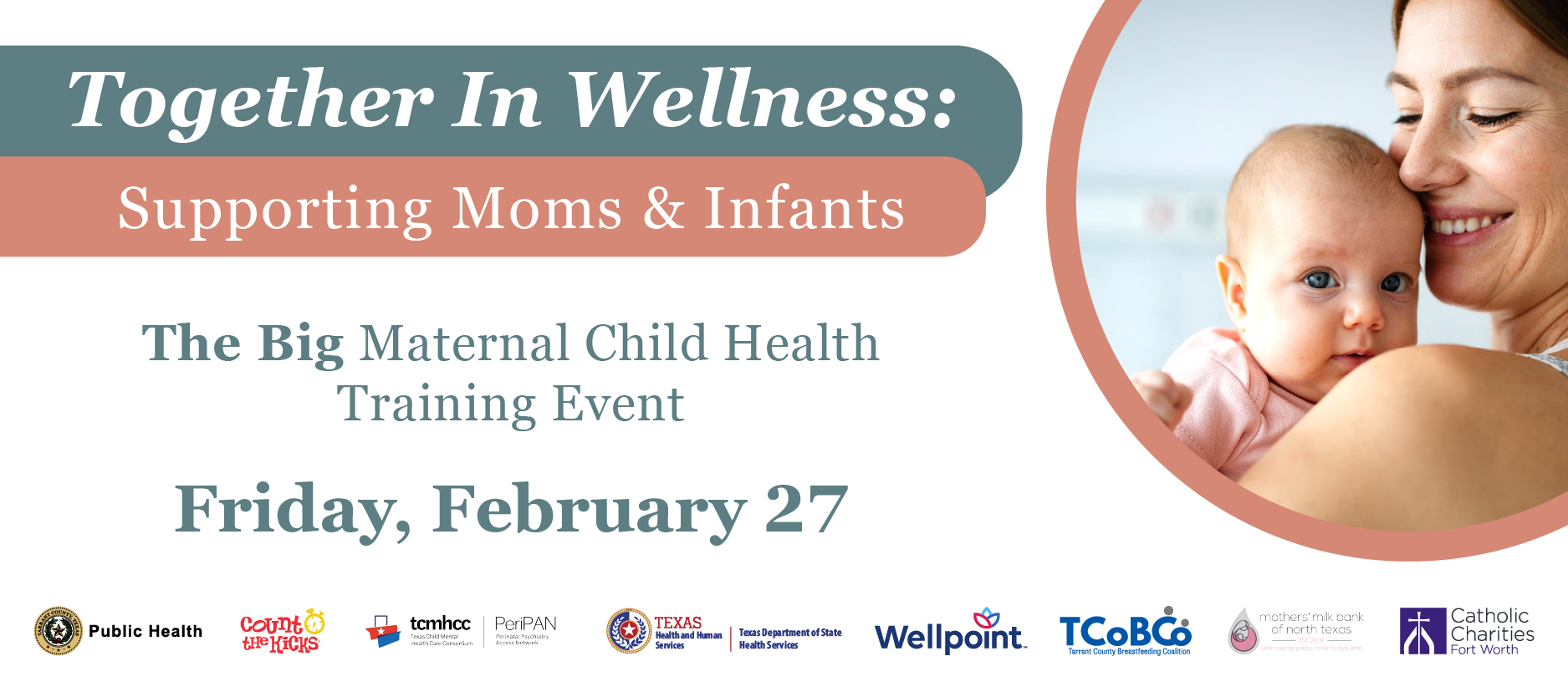
The Big Maternal Child Health Training Event - Together in Wellness: Supporting Moms and Infants
| Registration |
|---|
Due to the anticipated winter weather beginning Friday afternoon, January 23, 2026, and out of an abundance of caution, this event has been rescheduled. Please update your calendars for the new date: Friday, February 27th, from 8:45 a.m. to 4:30 p.m., at Catholic Charities Fort Worth. All sessions and presenters will remain unchanged. We look forward to welcoming you on Friday, February 27th. If you have questions, email Lauren Butschek-Neisler. |
Target Audience
All healthcare providers working in maternal-child health are invited to attend, including obstetricians, nurses, social workers, doulas, and community health workers.
Description
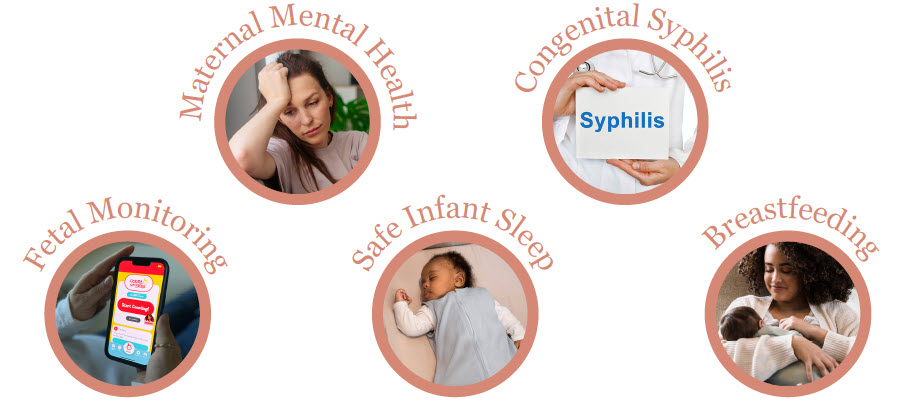
The purpose of The Big Maternal Child Health Training Event is to educate participants on specific topics that promote maternal-child health during pregnancy and beyond. The goal is to equip participants with knowledge and information about how to have effective conversations with families about the importance of counting kicks during pregnancy, the benefits of breastfeeding for the parent and the infant, maternal mental health, congenital syphilis, and safe infant sleep. Participants will also be provided up-to-date information on maternal-child health data specific to our county.
Agenda
All times listed are in Central Time. The agenda is subject to change.
| Time | Session |
|---|---|
| 8:15 am | Registration and Breakfast |
| 8:45 am | Welcome |
| 9:00 am | Tarrant County Maternal and Infant Health Update Kristin McElroy, MPH |
| 9:30 am | Bridging Community Connections Through Count the Kicks: Enhancing Prenatal Care with Digital Health Solutions Megan Aucutt Sarah Hybels Fetal movement monitoring is a critical aspect of prenatal care, offering early indications of fetal distress. Count the Kicks, a digital health solution, provides expectant mothers with an accessible and user-friendly tool for tracking fetal movements. This presentation explores how Count the Kicks not only enhances prenatal care but also bridges gaps within the community by fostering connections among healthcare providers, expectant mothers, and community organizations. The Association of Women's Health, Obstetric and Neonatal Nurses released a 2024 practice brief on decreased fetal movement, highlighting the impact of teaching expectant parents to recognize changes in fetal movement on both maternal and fetal outcomes. Count the Kicks is more than a digital tool; it is a catalyst for community building and enhanced prenatal care. By empowering expectant mothers to monitor fetal movements and fostering collaboration among stakeholders, Count the Kicks bridges critical gaps in prenatal healthcare. This presentation underscores the importance of integrating digital health solutions into community health practices and highlights the potential for similar initiatives to improve maternal and fetal health outcomes globally.
|
| 11:00 am | Maternal Mental Health Mehreen Khan, MD, MHA Maternal mental health conditions are the most common complications of pregnancy and childbirth. They affect 1 in 5 perinatal women and are the leading underlying cause of pregnancy-related death in the United States. Women who get treatment can and do recover.
|
| 12:00 pm | Lunch |
| 12:30 pm | Nature's Perfect Match: Human Milk for Human Babies Shaina Starks, MPH, CPH Valencia Moore, BSN, IBCLC The American Academy of Pediatrics recommends exclusive breastfeeding for the first six months and continued breastfeeding until two years or beyond, and that premature and low birthweight infants be fed donor human milk in the absence of the mother's own milk, for the best health outcomes. However, only 24% of Texas infants are breastfed exclusively for six months, which falls well short of the Healthy People 2030 42.45% goal. CDC breastfeeding surveillance also found that 19.8% of breastfed infants in Texas receive formula supplementation before hospital discharge. Supplementation with a human milk substitute has been associated with a more than 2-fold increase in breastfeeding cessation and is negatively associated with achieving breastfeeding goals. Educating healthcare workers is essential to supporting mothers in establishing breastfeeding and achieving infant recommendations. However, gaps in healthcare worker education programs are prevalent, and many healthcare workers report receiving no formal breastfeeding education. Additionally, if the healthcare worker does not work at a hospital with the Baby-Friendly Designation, where training is required, they are far less likely to use evidence-based practices for breastfeeding support. As a result, healthcare workers often lack the practical communication skills necessary to counsel mothers on breastfeeding initiation, troubleshooting common problems, and providing emotional support; have gaps in their understanding of the latest research and evidence-based practices regarding breastfeeding; are not equipped to address the full range of breastfeeding challenges that mothers face, or may fail to intervene early enough; and can too quickly introduce formula rather than emphasize breastfeeding. Comprehensive training and education that address evidence-based breastfeeding techniques and counseling practices can lead to more consistent, supportive, and effective breastfeeding education and care, ultimately improving breastfeeding outcomes and maternal-infant health.
|
| 1:30 pm | Safe Infant Sleep Isel Collazo Gómez, MSW, CHW, CPST Sharon Evans, RN, BSN, CPN, CPSTI, STAC-I Donna Hilderbrand, MD, MSPH, PhD Safe infant sleep is a national and state public health priority. In 2022, about 3,700 infants died from sleep-related death in the United States. The topic of safe infant sleep is complex and nuanced, underscoring the importance of consistent messaging that goes beyond campaign slogans. Providing information on risk reduction strategies alone will not improve outcomes. Conversations that include real solutions tailored to the needs of parents and caregivers offer a comprehensive approach to saving infant lives. This session will give providers resources to have these conversations with patients.
|
| 3:00 pm | Break |
| 3:15 pm | Congenital Syphilis in Texas Amy Carter Nationally, congenital syphilis case rates have risen annually since 2013. Historically, Texas has reported higher congenital syphilis rates than other states. Congenital syphilis increased approximately 148 percent from 2018 to 2022.
|
| 4:15 pm | Question and Answer Session |
| 4:30 pm | Adjourn |
Course summary
- 6.75 AMA PRA Category 1 Credits™
- 6.75 AOA Category 2A
- 6.75 CE Contact Hour(s)
Accreditation Statements
- MD: This activity has been planned and implemented in accordance with the accreditation requirements and policies of the Iowa Medical Society (IMS) through the joint providership of Des Moines University Medicine and Health Sciences (DMU) and Healthy Birth Day, Inc. DMU is accredited by the IMS to provide continuing medical education for physicians. DMU designates this live activity for 6.75 AMA PRA Category 1 Credit(s)™. Physicians should claim only the credit commensurate with the extent of their participation in the activity.
- DO: Des Moines University Medicine and Health Sciences (DMU) is accredited by the American Osteopathic Association (AOA) to provide osteopathic continuing medical education for physicians. DMU designates this activity for a maximum of 6.75 AOA Category 2-A credits and will report CME and specialty credits commensurate with the extent of the physician’s participation in this activity.
- Other healthcare providers: This activity is designated for 6.75 AMA PRA Category 1 Credit(s)™.
 |  |
Educational Grants
No ineligible company provided financial support for this continuing education activity.
Disclosures
The speaker(s) will disclose if any pharmaceuticals, medical procedures, or devices discussed are investigational or unapproved for use by the U.S. Food and Drug Administration (FDA). The activity director is responsible for determining educational content and selecting speakers.
Relevant to the content of this educational activity, the following individual(s) have no conflict(s) with ineligible companies to disclose.
- Megan Aucutt - Coordinator, Planning Committee Member, and Speaker
- Lauren Butschek-Neisler, LMSW - Activity Coordinator and Planning Committee Member
- Amy Carter - Speaker
- Isel Collazo Gómez, MSW, CHW, CPST - Speaker
- Sharon Evans, RN, BSN, CPN, CPSTI, STAC-I - Speaker
- Donna Hilderbrand, MD, MSPH, PhD - Speaker
- LaTasha Hinson, LCSW-S - Activity Director and Planning Committee Member
- Sarah Hybels - Speaker
- Mehreen Khan, MD, MHA - Speaker
- Kristin McElroy, MPH - Speaker
- Valencia Moore, BSN, IBCLC - Speaker
- Shaina Starks, MPH, CPH - Speaker
Disclaimer
The information provided in this activity is for continuing education purposes only. It is not a substitute for a healthcare provider's independent medical judgment regarding diagnostic and treatment options for a specific patient's medical condition.
Available Credit
- 6.75 AMA PRA Category 1 Credits™
- 6.75 AOA Category 2A
- 6.75 CE Contact Hour(s)
Price
Registration is closed.
If you have questions, email Lauren Butschek-Neisler.