
 Facebook
 X
X LinkedIn
 Forward
Fascial Distortion Model: Head, Upper and Lower Extremities
Registration |
|---|
If you are a DMU faculty member or student, call 515-271-1596 to complete your enrollment. Please do not register through the website. |
Target Audience
This workshop is open to all licensed healthcare practitioners.
Massage therapists can attend with instructor approval. Email DMU CME with your interest.
What is FDM?
The Fascial Distortion Model (FDM) is a clinically applied approach to understanding and treating musculoskeletal pain by identifying specific distortions in the body’s connective tissue, or fascia. It provides a framework for assessing how injury, overuse, or stress may alter fascia and contribute to pain, restricted movement, and impaired function.
FDM uses a structured, hands-on approach to evaluation and treatment. Practitioners consider the patient’s symptom description, body language, mechanism of injury, observable signs, and functional limitations to identify the suspected fascial distortion and guide treatment. Practitioners then assess changes in pain, mobility, and function after treatment, providing immediate clinical feedback for both the patient and practitioner.
The model describes six principal types of fascial distortions, each associated with characteristic body language, clinical presentation, and proposed treatment approach. Treatment targets the specific anatomical areas believed to be involved, including the fascia, ligaments, and joint capsules, to improve mobility, function, and pain.
FDM has been applied to a variety of acute and chronic musculoskeletal conditions. Acute conditions may respond more quickly to treatment, while chronic conditions may require ongoing treatment. Beyond its use as a treatment approach, FDM offers practitioners an anatomical framework for interpreting musculoskeletal presentations and considering how manual interventions may affect function. Continued research and clinical investigation are important for further evaluating the model, its proposed mechanisms, appropriate clinical applications, and its relationship to other manual, medical, and rehabilitative approaches.
Pre-Workshop Lecture Requirement
To prepare for the workshop, all learners must complete the four-hour online training lecture before participating in the hands-on portion of the course. Failure to complete the pre-workshop lecture will result in removal from the hands-on training, with no refund provided. Learners will receive continuing education credit for completing the pre-workshop lecture.
Agenda
The agenda is in Central Time and is subject to change.
| Saturday, April 24, 2027 | |
|---|---|
| 7:30 am | Registration and Breakfast |
| General Treatment | |
| 8:00 am | Trigger Bands |
| 8:45 am | Herniated Trigger Points |
| 9:15 am | Continuum Distortion |
| 9:45 am | Folding Distortion |
| 10:30 am | Cylinder Distortions and Tectonic Fixations |
| 11:15 am | Live Demonstration |
| 12:00 pm | Lunch |
| FDM Applied to the Upper Extremity | |
| 1:00 pm | Elbow |
| 1:45 pm | Wrist |
| 2:30 pm | Hand and Fingers |
| 3:10 pm | Shoulder |
| 3:45 pm | Live Demonstration |
| 5:00 pm | Adjourn |
| Sunday, April 25, 2027 | |
|---|---|
| 7:30 am | Breakfast |
| FDM Applied to the Lower Extremity | |
| 8:00 am | Foot |
| 9:00 am | Lower Leg |
| 9:15 am | Hip |
| 11:15 am | Live Demonstration |
| 12:00 pm | Lunch |
| FDM Applied to the Head Region | |
| 1:00 pm | Jaw and Face |
| 2:00 pm | Head, Including the Cranial Field |
| 3:30 pm | Conditions You May Not Have Considered |
| 4:00 pm | Introducing FDM to Your Practice |
| 4:30 pm | Questions and Answers Session |
| 5:00 pm | Adjourn |
Cancellation Policy
- All cancellations must be received in writing at [email protected].
- A nonrefundable administrative fee of $50 will be charged for all cancellations.
- If you cancel your registration after beginning the pre-workshop lectures, you will receive a 50% refund of the registration fee.
- No refunds will be given three (3) business days before the activity start date.
- Canceled registrations can be transferred to another individual for the same activity.
- Individuals who fail to attend the activity (no-shows) will not receive any refund. Forfeited fees may not be applied to any other activity.
Course summary
- 20.00 AMA PRA Category 1 Credits™
- 20.00 AOA Category 1A
- 20.00 CE Contact Hour(s)

Des Moines University’s campus, located at 8025 Grand Avenue in West Des Moines, Iowa, offers an impressive 88 acres, providing ample space for growth and innovation. State-of-the-art facilities cater to the evolving needs of students and faculty, fostering an exceptional learning and research environment.


Hotel Accommodations
Numerous hotels are available near Des Moines University Medicine and Health Sciences. The preferred hotel near DMU’s campus is Drury Inn & Suites. You may use the corporate code (333469) or booking link for a negotiated rate at this location only.
Drury Inn & Suites
Corporate Discount Code: 333469
5505 Mills Civic Parkway
West Des Moines, Iowa 50266
515-457-9500
Instructor
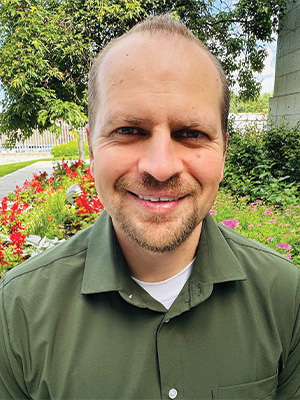
Joshua Boucher, DO, FAAFP
Dr. Boucher received a bachelor's degree in Biology from Utah State in 2012 and later graduated from Des Moines University in 2016. He was awarded a full-ride scholarship to medical school through the Health Professions Scholarship Program, which required him to serve 4 years in the Army after finishing residency. In 2019, he graduated from family medicine residency at Dwight D. Eisenhower Army Medical Center. That same year, he became board-certified in family medicine and, as a Captain in the U.S. Army, served as the Medical Director, Office in Charge, and Pain Champion, and mentored many military providers in the FDM. He is adjunct faculty at the Burrell College of Osteopathic Medicine and is incorporating the FDM into their curriculum. He is a Director At Large for the American Fascial Distortion Model Association, where he leads the research committee. He has published several medical articles, with his latest published in the Journal of Alternative and Complementary Medicine, titled: Manual Therapy Informed by the Fascia Distortion Model for Plantar Heel Pain: Results of a Single-Arm Prospective Effectiveness Study.
Table Trainer
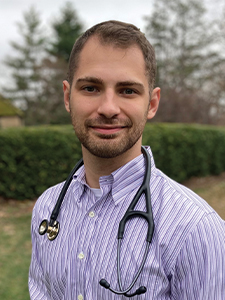
Spencer Randazzo, DO, FDM-IC
Dr. Randazzo is an urgent care physician practicing in Milwaukee, Wisconsin, and a dedicated advocate of the FDM. Originally from Lincoln, Nebraska, he earned his undergraduate degree in Biology from Nebraska Wesleyan University before completing medical school at Des Moines University, graduating in 2022. He completed his Family Medicine residency with Osteopathic Recognition at Saint Luke’s Family Medicine Residency in Milwaukee.
Dr. Randazzo was introduced to FDM during his second year of medical school in 2020 and has incorporated the model into his clinical practice ever since. He has completed all three FDM modules, spent a month training with Dr. Capistrant in Alaska and another month with Ken Nakasone in Hawaii, and has table-trained and assisted in teaching Modules 1, 2, and 3. He obtained his FDM international certification in 2024.
In addition to using FDM extensively in the urgent care setting to improve patient outcomes, Dr. Randazzo has contributed to the broader FDM community by lecturing at the World Congress in 2024 and the FDM Summit in 2026. As an AFDMA Board Member, he is passionate about advancing education, accessibility, and adoption of the Fascial Distortion Model across medical disciplines.
Accreditation Statements
- DO: Des Moines University Medicine and Health Sciences (DMU) is accredited by the American Osteopathic Association (AOA) to provide osteopathic continuing medical education for physicians. DMU designates this activity for a maximum of 20.0 AOA Category 1-A credits and will report CME and specialty credits commensurate with the extent of the physician’s participation in this activity.
- MD: This activity has been planned and implemented in accordance with the accreditation requirements and policies of the Iowa Medical Society (IMS). Des Moines University Medicine and Health Sciences (DMU) is accredited by the IMS to provide continuing medical education for physicians. DMU designates this live activity for 20.0 AMA PRA Category 1 Credit(s)™. Physicians should claim only the credit commensurate with the extent of their participation in the activity.
- Nurses: Des Moines University Medicine and Health Sciences has determined that this activity meets the requirements for 20.0 contact hours as defined by the Iowa Board of Nursing and Iowa Administrative Code 481-619.
- Other healthcare providers: This activity is designated for 20.0 AMA PRA Category 1 Credit(s)™.
 |  |
EDUCATIONAL GRANTS
No ineligible company provided financial support for this continuing education activity.
DISCLOSURES
The speaker(s) will disclose if any pharmaceuticals, medical procedures, or devices discussed are investigational or unapproved for use by the U.S. Food and Drug Administration (FDA). The activity directors are responsible for determining educational content and selecting speakers.
Relevant to the content of this educational activity, the following individual(s) have no conflict(s) with ineligible companies to disclose.
- Coming soon.
Disclaimer
The information provided in this activity is for continuing education purposes only. It is not a substitute for a healthcare provider's independent medical judgment regarding diagnostic and treatment options for a specific patient's medical condition.
Available Credit
- 20.00 AMA PRA Category 1 Credits™
- 20.00 AOA Category 1A
- 20.00 CE Contact Hour(s)